
Kim Novak's Vertigo is unlike a lot of movies about Hollywood's Golden Age. It's even unlike a lot of the director's previous documentaries about cinema and obsession. It's an immersive, intimate doc about one of the last stars of the studio system that sometimes veers into pretentiousness.
There are no talking heads, no interviews with past collaborators or lovers. It's Kim's show all the way. Part of that is that she's outlived nearly everyone she shared the screen with. Another part is that she essentially walked away from acting in the '70s, appearing in only a handful of films and one season of Falcon Crest. She instead devoted her life to art and animals, sometimes to an unhealthy degree.
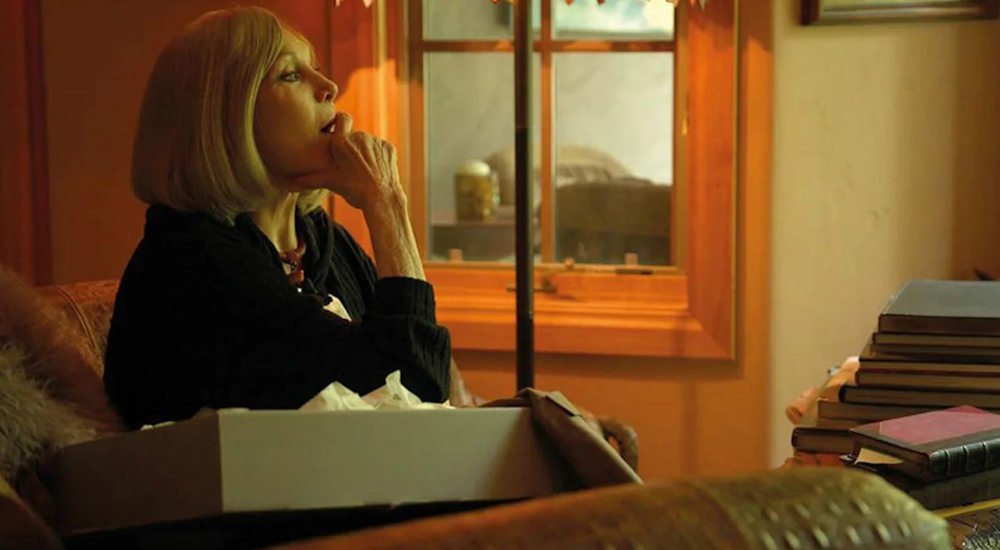
Even though Novak has suffered multiple house fires, she still has quite an archive, which she gave Philippe full access to. This includes photos, memorabilia, and most importantly, her grey dress from Vertigo. Late in the film she finally opens the sealed box it's been stored in for decades, and it's a truly powerful moment as she reckons with film history and her own past.
Though she touches on her early works, the film's focus is obviously the Alfred Hitchcock classic, which has become one of the most acclaimed films of all time in the last 20 years. Novak played Judy and Madeline, the two women who haunt Jimmy Stewart's Scottie. Novak has nothing but kind words for Stewart, who seemed to know exactly the right emotional beat to hit in each scene. (They would play opposite one another in the rom-com Bell, Book and Candle later the same year.)
There's not a whole lot more to explore, given her brief career. That means the film is quite short. Indeed, it probably would have made a better short than feature. But Novak is an absolute one-of-a-kind, and her outlook on the world – however kooky it might seem – is unique. So too is the film. If you care at all about old Hollywood and big personalities, it's quite essential viewing.