
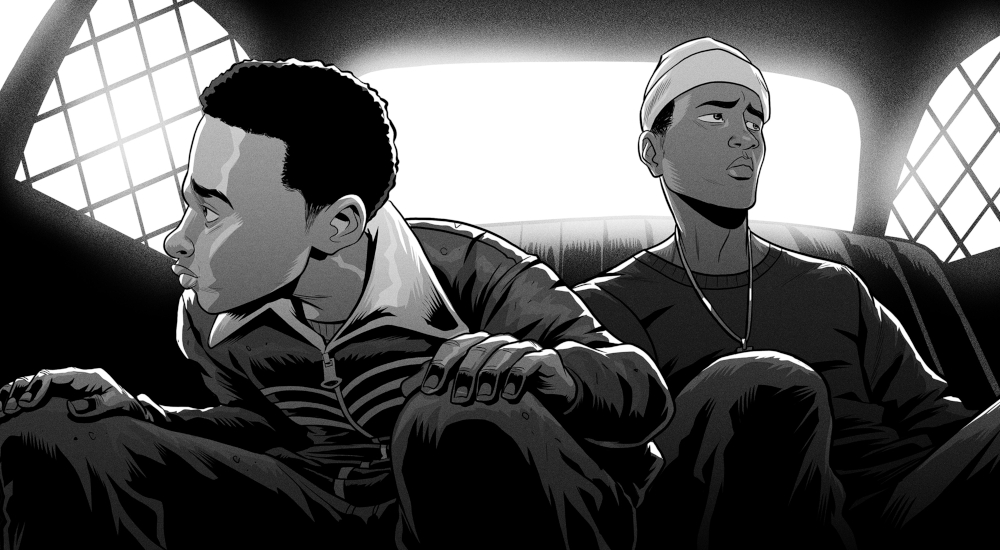
"Tell me about Baltimore."
Capturing the raw authenticity of a failed, corrupt justice system takes patience, precision, and a wealth of participation. Dawn Porter's When a Witness Recants, an emotionally charged telling of the carelessly fumbled 1983 Baltimore school shooting case, possesses all three. And while the film will undoubtedly leave you frustrated and angry, it exquisitely showcases the humanity buried within the myriad victims of the case.
The film, which takes place in Sandtown, West Baltimore, works to introduce audiences to the time and place of the city's first public school shooting. While many across the country saw the streets as dangerous, those who called them home felt safe.
Depositions and in-depth interviews with all parties allow Porter and collaborator, author Ta-Nehisi Coates, to paint a detailed picture of that day, when middle schooler DeWitt Duckett was shot and killed in the halls of Harlem Park Junior High School over a prized Georgetown jacket. And even after four decades, those involved recount the events with remarkable confidence, the memories cemented in their consciousness as they all became players in a blatant misuse of power and a disservice to justice.
As Porter and Coates work to inform their audience about the details of the case, they repeatedly highlight the racial biases that, to this day, continue to go unchecked. Senior Baltimore Police Detective Donald Kincaid, deposed during the case's review decades later, will have viewers fidgeting in their seats as they witness a man who blatantly misled a community, using the media to push a false narrative, painting three Black men as murderers and upending their peaceful and innocent existence.
Through court documents, we learn the extent to which Kincaid went to target the three teenagers who would eventually become known as the Harlem Park Three. Using his power to coerce false testimony from children, he set a dangerous precedent, destroying the community's trust in the police and deepening the already-present racial divide.
While the film, in many ways, writes itself, Porter and Coates superbly convey the information without getting too caught up in emotion. Granted, there are heated moments of frustration, sadness, heartbreak, fear, and resentment. Key witness Ron Bishop is one of the film's more prominent players. We ride the treacherous train with him as he attempts to right a wrong and allow others to better understand his position. I'm not sure that moment ever fully arrives, but a heated exchange near the film's conclusion will bring tears to your eyes as you realize that no one involved came out unscathed.
And no matter how much we try, no one can fully know what they would do or how they would react at that age and in that cultural climate.
Still, even with the dark and heavy subject matter, When a Witness Recants shines a bright light on the justice system and its lasting impact on those who find themselves tangled in its political web. And while justice ultimately found Alfred Chestnut, Andrew Stewart, and Ransom Watkins, no amount of money or apology can make up for the thirty-six years they lost at the hands of a system that undoubtedly failed them.
Sadly, based on current events, things don't appear to be much better.