
At times horrifying and at times quite goofy, 28 Years Later: The Bone Temple is a direct sequel that won't work for everyone. But it proves this is one of the most reliable – and malleable – franchises going.
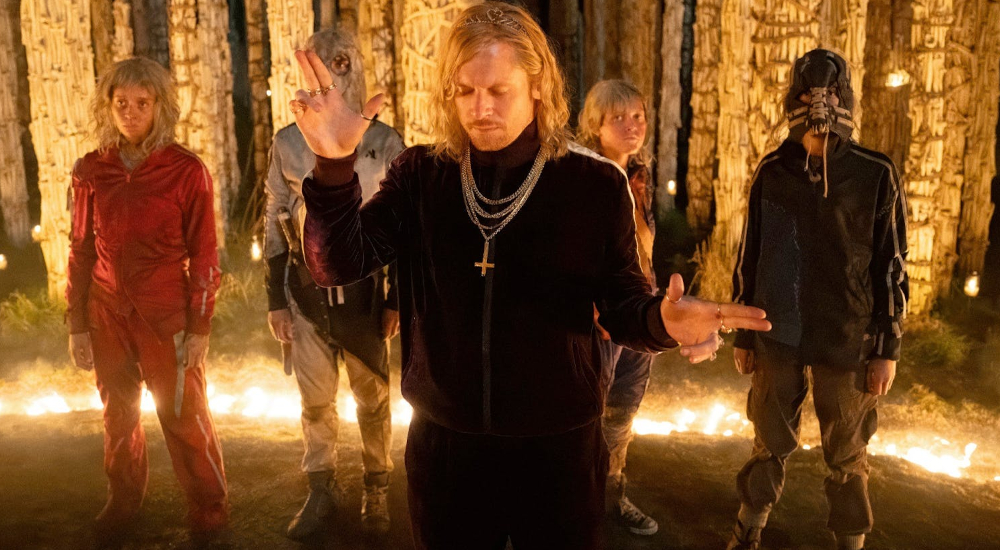
Picking up shortly after the events of last year's film, Spike (Alfie Williams) has reluctantly joined a bloodthirsty cult led by Sir Lord Jimmy (Jack O'Connell, radiating charisma and malevolence just as well as he did in Sinners). Though he's grateful for their protection, he literally can't stomach their sadistic rituals and wonton cruelty. He's in danger from both the infected and the survivors.
But the film spends a nearly equal amount of time with Dr. Ian Kelson (Ralph Fiennes), who guided Spike through a difficult loss in the previous film. Though Kelson continues to build his bone temple and live his isolated existence, he also begins conducting risky experiments on Samson (Chi Lewis-Parry), the towering "alpha" who can rip out spines like a straw through paper. He uses his medical knowledge, wits, and gentle demeanor in an attempt to find a cure for the infection. Yes, this even includes dancing to Duran Duran.
The Bone Temple's many diegetic music cues may take some audience members out from an otherwise deathly serious film. But credit to Nia DaCosta, no longer a victim of studio interference, who manages to make all this work together. When the Jimmys and Kelson finally meet, it's a collision of silly and scary that shouldn't work. But it's truly an incredible scene.
While I was initially a little mixed on Danny Boyle's 28 Years Later, I've come to appreciate that film's technical innovation and profane poetry a lot more. This entry isn't quite so ambitious, yet it's oddly more hopeful. This may be the single most violent mainstream film outside the Saw franchise, yet the series continues to believe in the goodness of humanity. You'll experience some of the depravity of mankind, as well as a lot of the decency.
28 Years Later: The Bone Temple continues the series' terrifying scenes and profound discussions on what makes us human. If you can handle the gore, you'll be rewarded with another brilliantly made survival thriller.